For businesses in the DFW Metroplex, a reliable network is the invisible backbone of daily operations. Whether you are opening a new headquarters in Plano, expanding a distribution center in Fort Worth, or upgrading a suite in Downtown Dallas, the infrastructure budget is a critical consideration.
The cost for professional structured cabling installation in the Dallas-Fort Worth area typically ranges between $150 and $350 per data drop. However, “per drop” pricing is just one component. The final investment depends heavily on cable category (Cat6 vs. Cat6A), building architecture, and necessary certification standards.
This guide breaks down real-world costs and explains where the budget goes when securing professional structured cabling in Dallas.
Average Structured Cabling Costs in Dallas
When budgeting for a project, contractors generally provide estimates based on the number of “drops” (individual cable runs from the server room to a wall jack or device).
| Service / Item | Estimated Cost (DFW Area) |
| Cat6 Data Drop (Standard) | $150 – $225 per drop |
| Cat6A Data Drop (High Speed) | $225 – $350 per drop |
| Fiber Optic Cabling (Backbone) | $3,000-$5,000+ (varies by strand count) |
| Technician Labor Rate | $85 – $135 per hour |
| Site Survey & Estimate | Free with Z-Tech Communications |
Note: Prices often decrease with volume. A project with 100+ drops in an open office will usually have a lower cost-per-drop than a project with 5 drops in a complex hard-lid ceiling environment.
What Is Included in a “Per Drop” Price?
A reputable low-voltage contractor does more than just pull wire. A comprehensive structured cabling quote generally includes:
- The Cable: High-quality copper cabling (Cat6 or Cat6A).
- Hardware: Keystone jacks, faceplates, and patch panels.
- Labor: Routing cables through ceilings (plenum or non-plenum) and walls.
- Termination: Professional connection at both the user end and the server rack.
- Testing: Verification that the line meets speed and signal standards.
4 Key Factors That Influence Your Installation Quote
Why might one quote be $3,000 and another $5,000? In the DFW market, four specific variables act as the primary cost drivers.
1. Cable Category (Cat5e vs. Cat6 vs. Cat6A)
While Cat5e is largely obsolete for new commercial installs, the choice usually comes down to Cat6 vs. Cat6A.
- Cat6: The standard for most offices. Supports 1Gbps up to 100 meters and 10Gbps up to 55 meters. It is cost-effective and sufficient for general business use.
- Cat6A: Required for high-performance environments (medical imaging, data centers, tech firms). It supports full 10Gbps speeds up to 100 meters, but is thicker, harder to install, and more expensive.
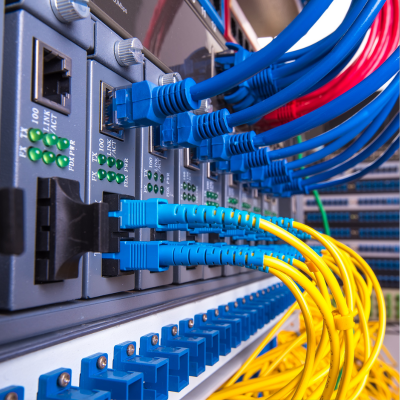
- Fiber Optics: For runs exceeding 300 feet or for connecting separate IDF closets, fiber optic cabling is necessary to maintain signal integrity and speed.
2. Ceiling Type and Building Structure
Labor often accounts for 60% of the project cost. The difficulty of accessing the ceiling space directly impacts the price.
- Drop Ceilings (T-Bar): The most accessible environment. Technicians can lift tiles to run cable efficiently.
- Hard Cap / Sheetrock Ceilings: Requires cutting access hatches or more labor-intensive “fishing” of cables, which significantly increases the price.
- Open Warehouse Ceilings: These environments often require scissor lifts and conduit work to protect cables. This is common for our industrial projects in Grand Prairie and large-scale facilities in Mesquite.
3. Plenum vs. Riser Rated Cable
Fire codes in Dallas and surrounding municipalities are strict. If an office uses the space above the ceiling for air circulation (a “plenum” space), the installer must use Plenum-Rated (CMP) cable. This material has a special jacket that does not emit toxic fumes when burned. It costs approximately 30-40% more than standard (Riser) cable but is non-negotiable for safety compliance.
4. Network Closet Build-Out
The condition of the server room affects the final quote. If the installer needs to mount a new rack, install ladder trays, or reorganize a messy server room (“spaghetti wire”), this adds hardware and labor costs. Proper networking and Wi-Fi configuration ensures these physical connections translate into a stable internet experience.
Cost vs. Value: Why “Cheap” Cabling Costs More
Fixing work done by “trunk slammers”, unlicensed handymen offering rock-bottom prices, often ends up costing businesses more in the long run. Common issues with low-bid installers include:
- Poor Termination: Causes intermittent internet dropouts.
- CCA Cable: Using “Copper Clad Aluminum” instead of pure copper creates fire hazards and brittle connections.
- No Certification: Without proof that the cable supports the intended speed, the network may underperform.
At Z-Tech Communications, every single point is tested and labeled. Whether outfitting corporate offices in Frisco, upgrading retail spaces in Plano, or wiring facilities in Irving, the network must pass industry standards before the job is considered complete.
Frequently Asked Questions
How much does it cost to wire a small office in Dallas?
For a small office with roughly 10 data drops, a patch panel, and standard installation in a drop ceiling, the investment typically falls between $2,000 and $3,500. This covers the “minimum truck roll” fees, setup time, and professional termination.
Is Fiber Optic cabling more expensive than Cat6?
Yes, while the material costs can be comparable, the termination equipment (fusion splicing) requires specialized labor. However, fiber is essential for connecting buildings or large warehouses.
Do you offer free estimates for DFW businesses?
Yes. Businesses shouldn’t pay to know what a project costs. We provide on-site surveys across the Metroplex, from Rockwall to Fort Worth.
Get a Precision Quote for Your Project
Don’t guess with infrastructure budgets. Z-Tech Communications provides clear, transparent pricing with no hidden fees. We serve the entire DFW area, helping businesses build networks that last.
Contact Z-Tech Communications today to schedule a site survey.