Low voltage wiring is any cabling that carries power-limited signals instead of standard building power, including data, phone, camera, access control, AV, and alarm wiring. Structured cabling is one part of that category: the organized, standards-based data network that is installed to TIA specifications, tested, labeled, and documented so it can be managed for years.
All structured cabling is low voltage. Not all low voltage wiring is structured cabling. That difference matters when you are hiring for an office buildout or a move in Dallas-Fort Worth, because the word “low voltage” on a bid does not tell you how the data network will be built.
What Counts as Low Voltage Wiring?
On a commercial project, low voltage usually covers every system that is not line-voltage electrical. That can include:
- Data cabling for workstations, printers and conference rooms
- Wireless Access Point (AP) cabling for WiFi coverage
- IP camera cabling back to a recorder (NVR)
- Access control wiring for card readers, door hardware and controllers
- Phone system cabling
- AV and speaker wiring
- Alarm and sensor wiring
These systems share ceilings, pathways, and often the same telecom room. The National Electrical Code treats power-limited and communications circuits under different rules than standard building wiring.
What Makes Cabling “Structured”
Structured cabling is a method, not just a cable. It follows the ANSI/TIA-568 standards for how a commercial data network is designed, installed, and verified. In practice, that means:
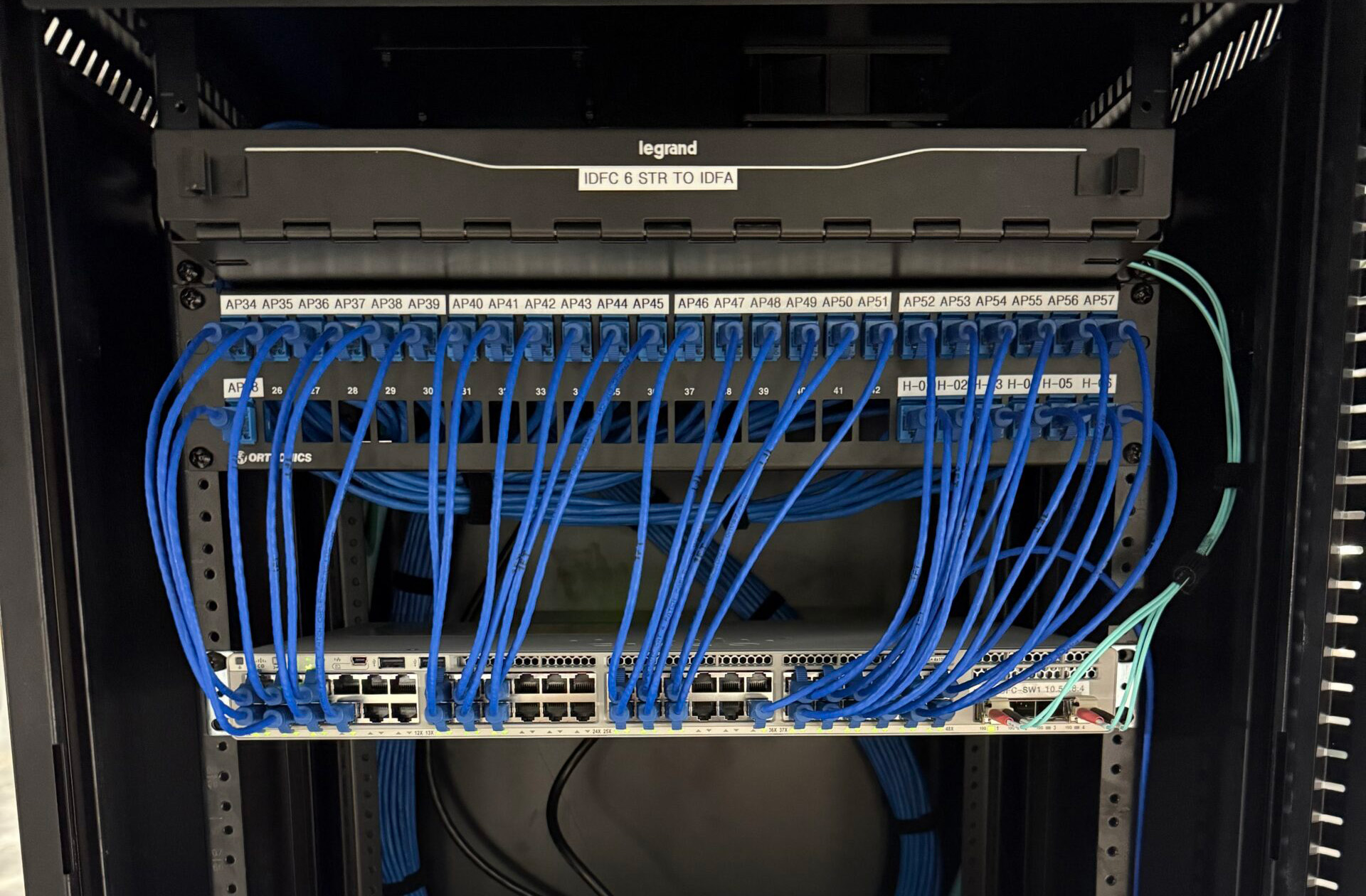
- Runs home back to a defined Main Distribution Frame (MDF) or Intermediate Distribution Frame (IDF)
- Runs terminate on a patch panel at the rack. At the device end, most runs terminate on a jack, while devices such as cameras and APs may connect directly
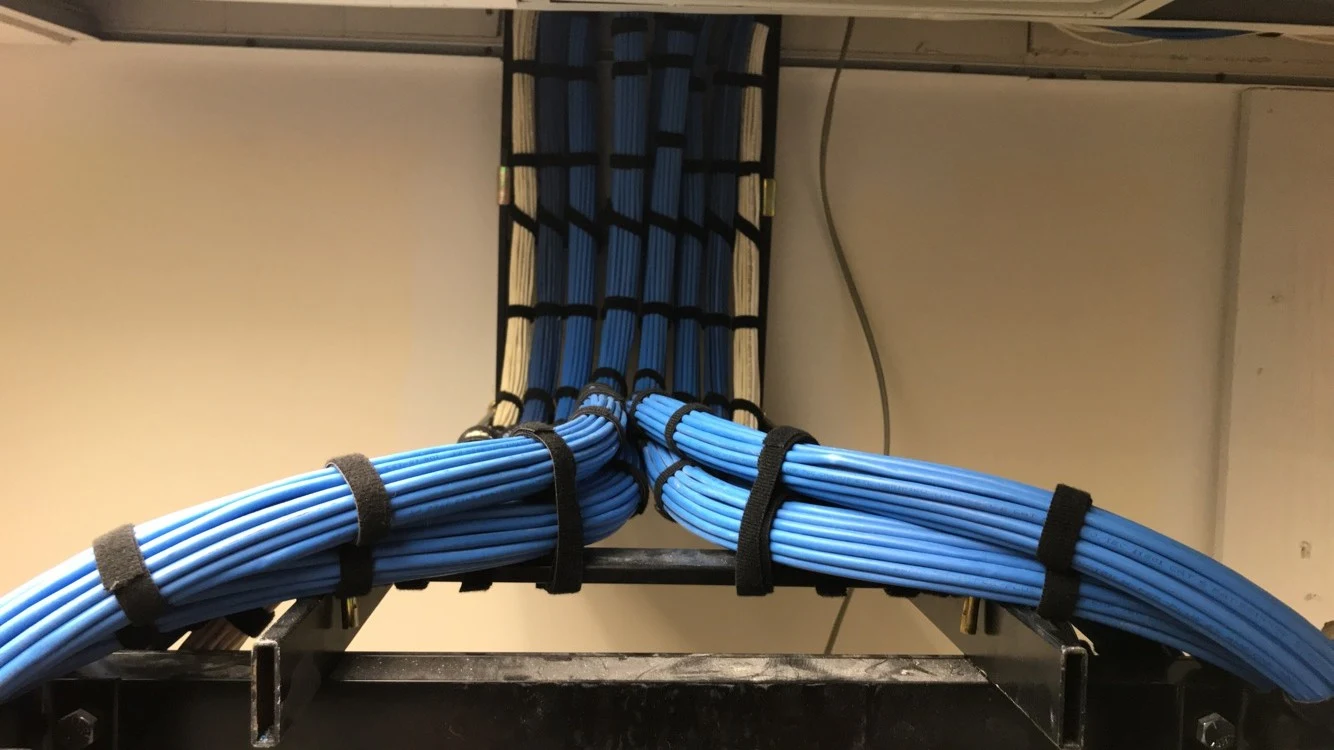
- Cable is supported along a proper pathway and dressed in the rack for airflow and access
- The telecom room is grounded and bonded to NEC safety codes
- Runs are tested, with copper certification and fiber testing performed as specified in the proposal
- Ports, panels and cables are clearly labeled
- Documentation is delivered as defined in the project scope
At Z-Tech, Fluke DSX certification of copper runs is included when specified in the proposal. That certification step is one of the clearest lines between a structured data network and cable that has simply been pulled and connected. You can read more in our guide to structured cabling for business owners.
Where the Two Overlap on a Commercial Job
On most buildouts, the data network and the other low voltage systems meet in the same places. AP cabling and IP camera cabling are data runs, so they belong in the structured system and should be tested and labeled like any workstation run. Access control panels often connect to the network as well, and card readers and door hardware share ceiling pathways with data cable.
Because of that overlap, it helps to plan these systems together. When commercial access control installation and commercial security camera systems are scoped alongside the data network, pathways are sized once, rack space is planned for every system, and late additions do not end up routed wherever there happens to be room.
Why the Data Network Needs Its Own Standard
Every low voltage system depends on proper installation. Data cabling adds one more requirement: each run has to meet the performance standard for its category. A copper run can pass a basic connectivity check and still underperform, dropping speed under load or failing intermittently. Certification testing measures each copper run against its category limits, and fiber is tested with methods suited to fiber.
Documentation is the other reason. Offices change constantly: new hires, moved desks, a new IT provider. When ports are labeled and the records match what is in the room, a move or add takes minutes. When runs are unlabeled and untested, every change starts with tracing cable.
Licensing and What to Ask a Low Voltage Contractor in Texas
Licensing in Texas depends on what the contractor installs. Companies that install access control and security systems must hold a license from the Texas Department of Public Safety Private Security Program. Z-Tech holds a Texas DPS private security license. For background, see our post on licensing rules for access control installers in Texas.
Whoever you hire, ask the same questions:
- Which systems are in your scope, and which are excluded?
- What license do you hold for access control and security work?
- How will copper runs be certified, and how will fiber be tested?
- How will ports, panels and cables be labeled?
- What documentation do I receive at the end?
Clear answers to those five questions will tell you more than the words “low voltage” on a business card.
Choosing a Contractor for Both
You do not need a different company for every low voltage system. Z-Tech is a structured cabling and low voltage contractor in Dallas that installs the data network along with AP cabling, camera cabling, access control, and VoIP phone system cabling. Line-voltage electrical work is performed by the electrical contractor, and Z-Tech coordinates with them as needed.
One contractor for the data network and related systems means one scope, one pathway plan, one rack layout, and one set of documentation.
Planning Several Systems at Once?
Planning data, camera, and access control cabling in the same building? Call Z-Tech at (469) 991-9100 to scope them together, with testing, labeling and documentation spelled out in the proposal.
Frequently Asked Questions
Is structured cabling considered low voltage?
Yes. Structured cabling is a type of low voltage work. What sets it apart is the standard behind it: TIA-568 installation practices, testing, clear labeling and documentation.
What does a low voltage contractor do?
A low voltage contractor installs power-limited systems such as data cabling, AP cabling, cameras, access control, phones, and AV. The exact scope varies by contractor and by the licenses they hold.
Do I need an electrician for network cabling?
Network cabling is low-voltage work handled by a cabling contractor. Line-voltage electrical work, such as power for racks and equipment, is performed by the electrical contractor, with coordination between the two as needed.
Can one contractor handle cabling, cameras and access control?
Yes. Z-Tech installs structured cabling, camera cabling, and access control together and holds a Texas DPS private security license for access control and security work.