
Fiber optic installation cost depends on a handful of factors: the type of fiber, the strand count, the distance and pathway of each run, how the fiber is terminated or spliced, and the testing and documentation included in the scope. Because every building and project is different, the most reliable number is a quote written for your agreed scope.
This guide walks through each factor so you can budget realistically and read a fiber quote with confidence.
What Shapes the Cost of a Fiber Install
A fiber project is more than cable. The total covers the cable itself, the work to route it, the hardware at each end, the labor to terminate or splice it, and the testing that confirms it works. Each piece scales differently depending on your building, which is why two fiber projects of similar length can be priced very differently.
Single-Mode vs. Multimode Fiber
The first decision is the type of fiber. Multimode fiber is commonly used for shorter runs inside a building. Single-mode fiber is used for longer runs, such as between floors in a large facility or between buildings. The distance and speed a link can support depend on the fiber grade and the network equipment (optics) at each end.
Single-mode is not automatically the more expensive choice. The cable price difference is often small, and the bigger cost difference can come from the optics and equipment matched to each fiber type. The right choice depends on how far the run goes, what it needs to carry and what equipment is already in place.
Distance, Strand Count and Pathway
Longer runs mean more cable and more labor, but the pathway often matters more than the distance. A run through an open ceiling with existing supports is very different from a run through occupied floors or a riser between levels.
Strand count also affects cost. More strands mean more terminations and more testing, but adding spare strands during the install is usually far less expensive than pulling new fiber later. Building code requirements also drive the cable’s jacket rating, such as riser or plenum. For multi-building sites such as distribution centers, see how Z-Tech handles fiber links across warehouse and multi-building sites.
Building-to-building fiber projects are evaluated individually based on the pathway and scope.
Termination and Splicing
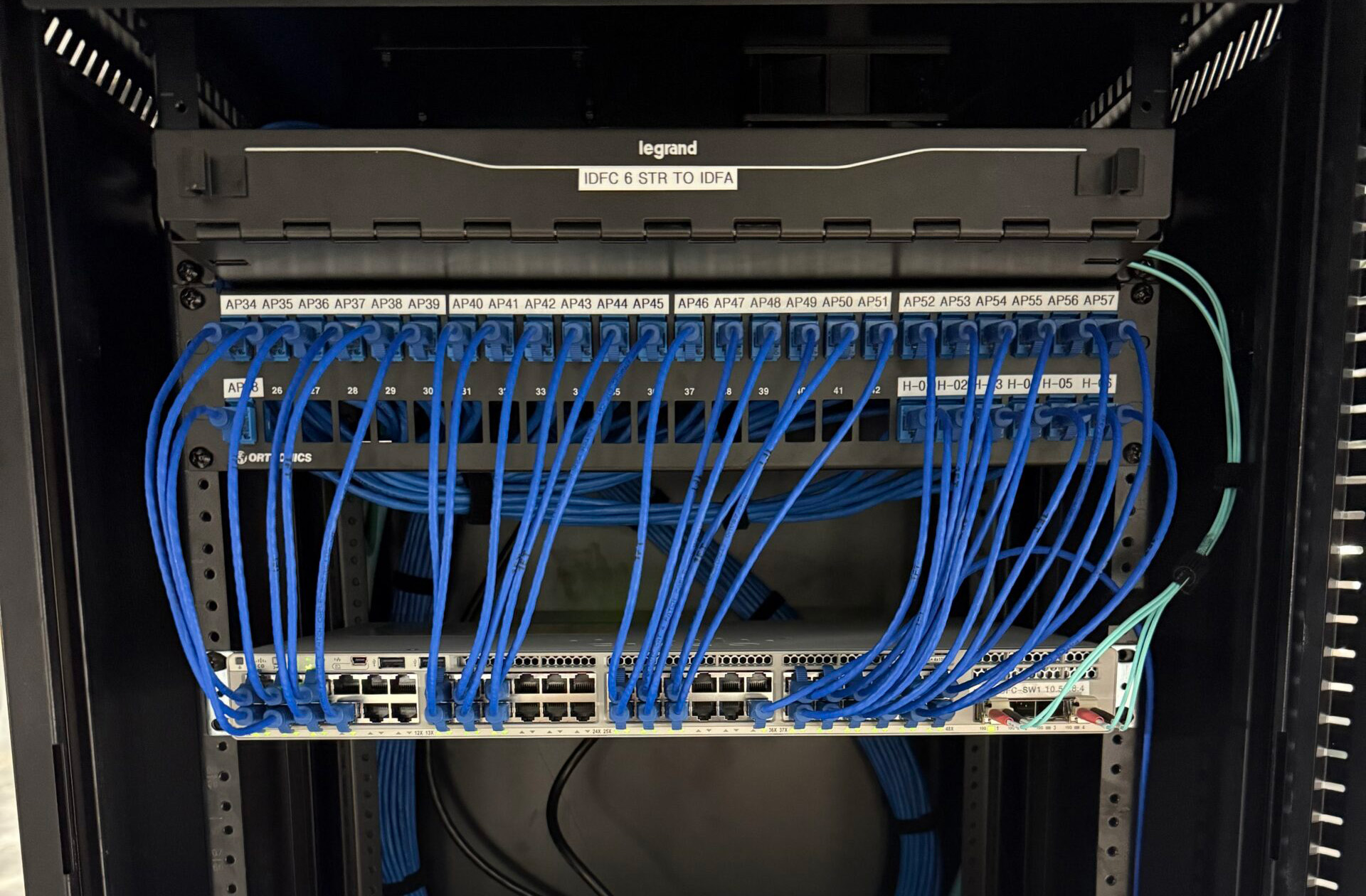
Every strand has to be terminated or spliced cleanly at both ends of the run, at fiber patch panels or enclosures in the telecom rooms. Termination quality directly affects signal loss, so this is skilled work, not a finishing step.
Z-Tech performs fusion splicing in-house. The method used on a given project affects labor time and hardware cost, so a quote should state how the fiber will be terminated.
Testing
Fiber testing is another place quotes can differ. Common methods include insertion loss testing, which confirms the full link is within its loss budget, and OTDR testing, which maps the run and shows the location of connectors, splices or faults.
Which tests are performed, and what results you receive, should be spelled out in the agreed project scope. If a quote does not say how the fiber will be tested, ask before you compare prices.
Labeling and Documentation
Ports and panels should be clearly labeled so anyone can see which strands are in use, which are spare and where each run terminates. The documentation delivered at the end of the project, such as test results and diagrams, should match what is defined in the scope. Clear records make future work faster and less expensive.
Fiber vs. Copper: When Fiber Is Worth It
Fiber usually costs more than copper per run, but it solves problems copper cannot. A copper channel is limited to 100 meters total: a 90-meter permanent link plus patch cords at each end. When a run needs to go farther or connect floors and closets across a large facility, fiber is the right tool.
Most commercial networks use both: fiber for the backbone and Cat6 or Cat6A for horizontal runs to workstations, APs and cameras. Our post on how Cat6, Cat7 and fiber compare covers the tradeoffs in more detail, and why fiber holds its value over time explains the long-term case.
How to Get an Accurate Fiber Quote in Dallas
An accurate quote starts with a clear scope. Depending on the project, that may come from a site visit, from plans or from both. From there, the quote should list:
- Fiber type and strand count for each run
- Pathway and cable rating
- Termination or splicing method and hardware at each end
- Testing method and the results you will receive
- How ports and panels will be labeled, and the documentation delivered
- Schedule and any after-hours work
- Exclusions and price for the agreed scope
Timelines depend on the project, so the schedule should be set once the scope is agreed. The same cost factors apply to copper projects too, as covered in our guide to structured cabling installation cost in Dallas.
Planning a Fiber Project?
Planning a fiber backbone or a link between floors? Call Z-Tech at (469) 991-9100 to talk through your scope and get a fiber quote that spells out fiber type, splicing, testing and documentation. See our commercial fiber optic installation in Dallas-Fort Worth for the full service.
Frequently Asked Questions
How much does fiber optic installation cost per foot?
Per-foot pricing leaves out most of what drives a fiber project: termination or splicing, enclosures, pathway work, testing and documentation. A quote for the agreed scope is the reliable way to budget.
Is single-mode fiber more expensive than multimode?
Not necessarily. The cable cost difference is often small. The larger difference usually comes from the optics and equipment at each end, which depend on the project.
How long does a commercial fiber install take?
It depends on the project, including the number of runs, the pathways and whether work happens after hours. The schedule is set once the scope is agreed.
Can fiber connect two buildings on the same property?
Often, yes. Building-to-building fiber projects are evaluated individually based on the pathway and scope.