
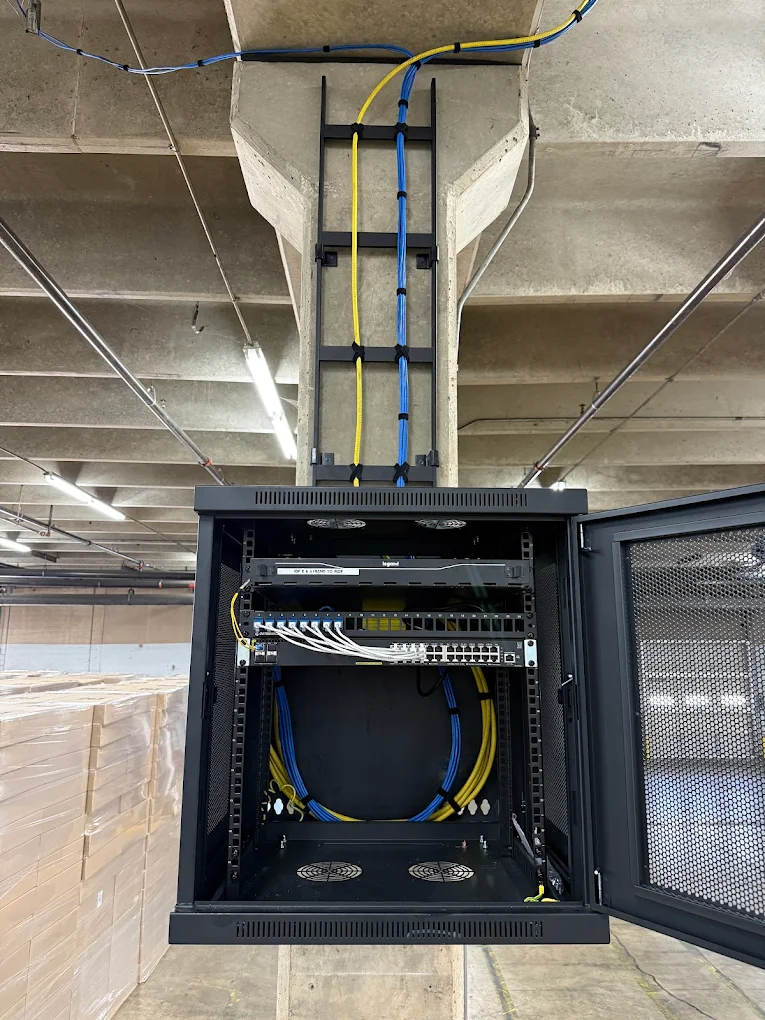
A clean rack is not about appearance. It means you can trace any cable end to end without disconnecting anything, every port matches a label that matches the as-built, air moves front to back without obstruction, and a technician who has never seen the room can work in it safely. Tidiness is the byproduct.
What Proper Server Rack Organization Actually Involves
Good server rack organization is a set of decisions made before the first cable is terminated, not a cleanup performed at the end.
Position patch panels and switches so patch cords cross the shortest practical distance, with horizontal managers between them and vertical managers running the full height of the rack. Patch cords are sized to the path rather than pulled from whatever length was in the box, because excess cord has to go somewhere and that somewhere is usually a knot at the bottom of the cabinet.
Bundles are dressed with hook-and-loop straps rather than cinched zip ties. Overtightening deforms the pair geometry inside a Cat6 jacket and degrades runs that tested fine before someone tightened them. We respect bend radius at every turn, including where cable enters the panel, which is where it is most often violated.
Heavy equipment and the UPS sit low for stability; power and data are separated, the rack is bonded and grounded, and empty rack units are filled with blanking panels. We test and certify every run to ANSI/TIA standards before the doors close. That last step separates a rack that looks finished from one that is.
Labeling and Documentation: The Part Everyone Skips
Labeling is the difference between a rack you can work in and a rack you have to reverse-engineer.
Both ends of every run get a permanent label. The port number on the patch panel matches the jack label at the wall, and both match the as-built drawing and port schedule handed over at closeout. TIA-606-B exists specifically to make that administration consistent, so a technician arriving two years later reads the same scheme the original installer used.
Handwritten tape on a bundle is not documentation. Neither is a labeling scheme that lives only in the head of the person who installed it. If your building has changed hands, changed IT providers, or changed suites since the cabling went in, there is a good chance nobody currently holds the map. That’s common in healthcare and clinical spaces, where documentation requirements aren’t optional, but the original paperwork often doesn’t survive a vendor change.
Airflow, Heat, and Equipment Lifespan in a Messy Server Rack
A messy server rack is a thermal problem before it is an aesthetic one.
Dense cable bundles packed against the rear of switches block the exhaust path. Coiled slack stuffed into the bottom of an enclosure traps heat where it accumulates. Open rack units left unfilled let hot exhaust air recirculate to the front intakes instead of leaving the cabinet. Add a closet with no dedicated cooling, which describes a great many small offices, and equipment runs hotter than it was designed to run.
Heat is cumulative rather than dramatic. Sustained elevated operating temperature is widely understood to shorten electronic component life, and you do not see a failure the week the rack gets crowded. You see switches aging out early, intermittent faults that are hard to reproduce, and a replacement cycle that arrives sooner than budgeted.
What a Messy Server Rack Costs in Troubleshooting Hours
The real expense is labor, and it shows up every time something breaks.
In a dressed and labeled rack, isolating a dead drop starts with reading a label and ends with a patch cord swap. In an undressed one, the same task means toning out the run, tracing bundles by hand, and moving cables to see behind them. A task measured in minutes becomes an afternoon, and it is billed as an afternoon.
There is a second cost. Working inside a congested rack means disturbing cables that were working, and accidental disconnections during unrelated maintenance often cause small-office outages. That risk depends almost entirely on how much has to be moved to reach anything, which is why cleanup and network infrastructure work belong in the same visit.
Structured Cabling Before and After: Real Project Photos
The photos below are from DFW projects completed by our crews, published with client permission and with identifying labels and asset tags obscured.
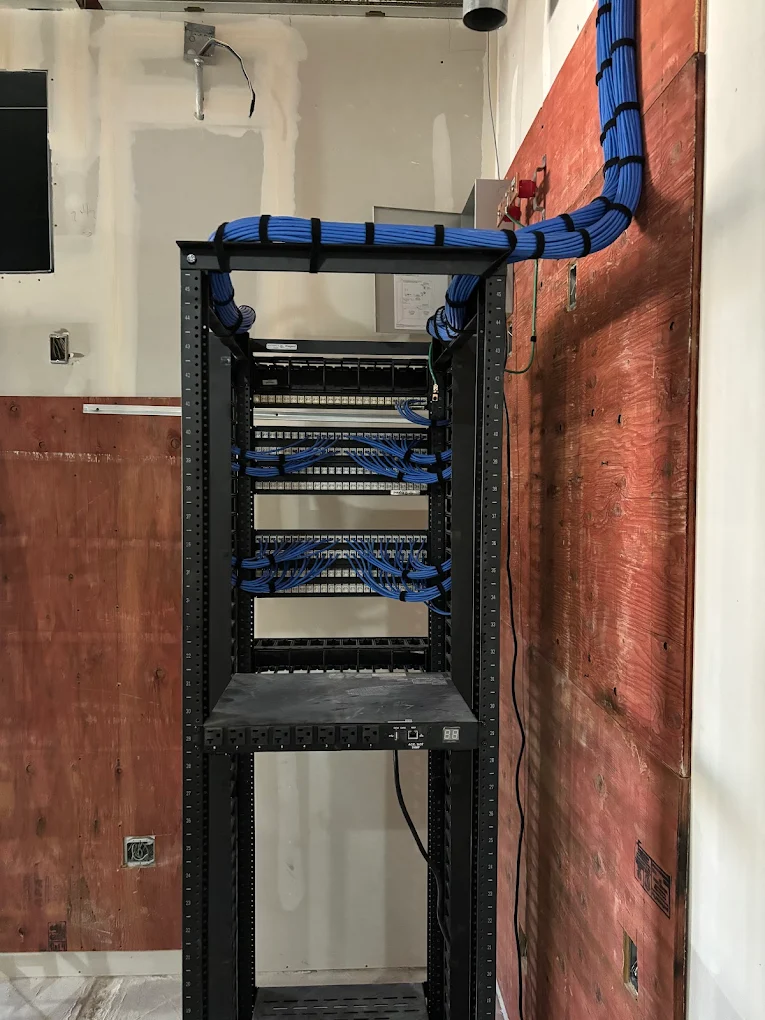
A structured cabling before-and-after sequence is worth more than a description because the difference is immediately clear to someone with no technical background. Look for three things in each pair: whether you can follow a single cable from panel to switch without losing it, whether every port carries a label, and whether you can see the rear of the equipment at all.
Most of these started as a working network. Nothing here was broken. It was installed under time pressure, then added to over years by different hands, which is how nearly every crowded closet in the Metroplex got that way.
Book a Network Closet Cleanup
A network closet cleanup is usually shorter than people expect because the cable already reaches where it needs to go. What changes is how it is routed, dressed, labeled, and documented, plus the runs that turn out to be dead and can finally come out.
Call Z-Tech Communications at (469) 991-9100 for a walk-through. We will open the rack, tell you honestly whether it needs a full re-termination or just dressing and labeling, and hand you a port schedule and as-built when it is done. Offices already planning a move or a floor plan change usually get the best value by folding this into the cabling checklist for a new space.
Server Rack Organization FAQs
Can a messy server rack actually cause network problems, or does it just look bad?
Both. Overtightened bundles and violated bend radius degrade individual runs, blocked airflow shortens equipment life, and congestion causes accidental disconnections during maintenance. The performance issues are real but usually intermittent, which is what makes them expensive to chase.
Do we have to re-run the cable, or can we clean it up in place?
Often it can be dressed and labeled in place. Re-termination is needed when runs are damaged, lengths are wrong for the equipment layout, or certified testing shows the existing terminations don’t pass. A walk-through answers it before anyone quotes.
How long does a network closet cleanup take?
Most single-rack cleanups are a same-day or overnight job, scheduled after hours so nothing drops during business hours. Re-termination and equipment relocation extend that, and the walk-through sets the schedule.
What should I receive when the work is finished?
A labeled rack, a port schedule mapping every panel position to its location, an as-built drawing, and test results for any re-terminated run. Without those, the cleanup was cosmetic.