Commercial access control costs $1,500 to $3,500 per door installed in Dallas-Fort Worth. That figure covers the reader, the controller share, electric locking hardware, cabling, and programming. Three variables move it: the condition of the door you are electrifying, how far the cable has to run, and whether the platform is cloud-managed or on-premises.
What Is Included in Commercial Access Control System Cost Per Door
Every credible quote breaks into six line items. Here is what each one runs in the DFW market.
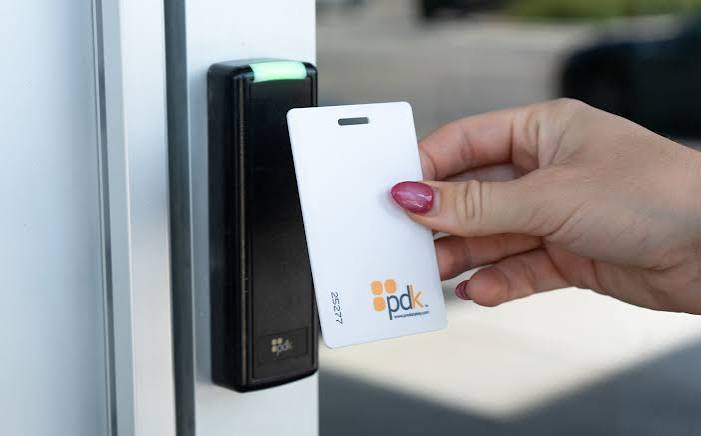
Reader: $150 to $600. A basic proximity or keypad reader sits at the bottom of that range. Bluetooth and mobile-credential readers, plus vandal-resistant models for exterior openings, sit at the top.
Controller capacity: $250 to $700 per door. Controllers are purchased by door count, so the per-door share drops as the system grows. A single opening can carry the full cost of the panel, enclosure, and power supply.
Electric locking hardware: $250 to $900. An electric strike in an existing hollow metal frame is the low end. A magnetic lock, an electrified lever, or any door that needs a power transfer hinge costs more.
Door position switch and request-to-exit device: $100 to $300. These are commonly required. Without them, you cannot distinguish a propped door from a forced one, and you cannot document safe egress.
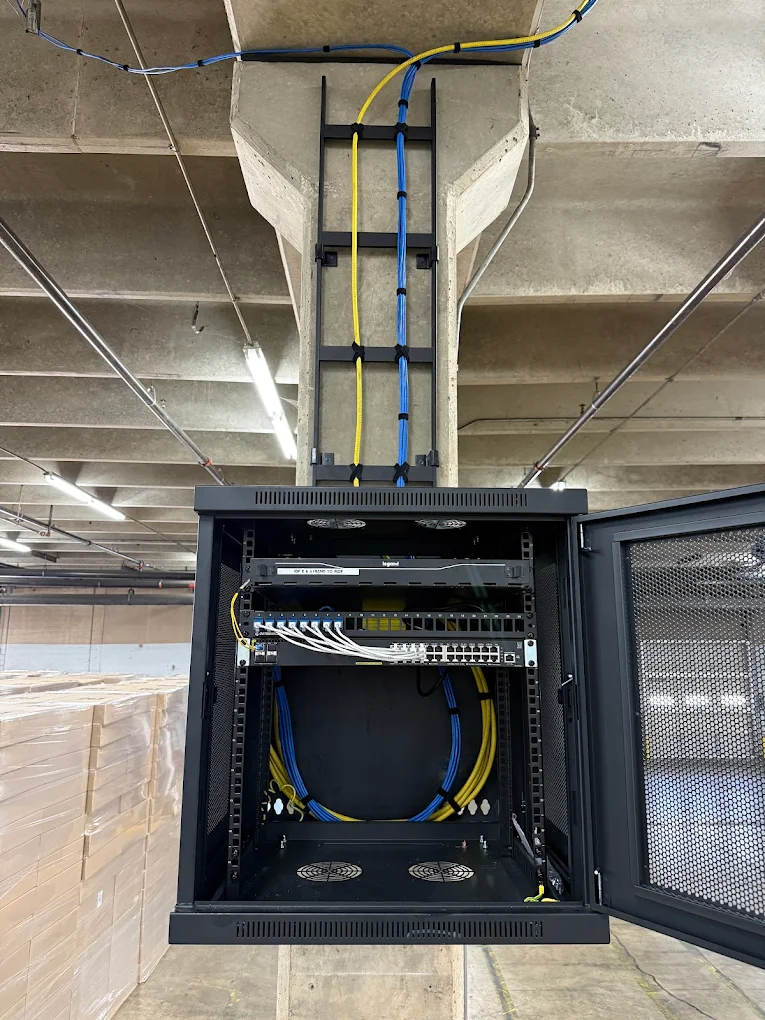
Low-voltage cabling: $150 to $500 per opening. Distance back to the panel, ceiling access, and whether conduit is required drive this line more than anything else. These are the same variables behind what structured cabling installation costs in Dallas on any other low-voltage project.
Programming, credential enrollment, training, and as-built documentation: $200 to $600 per door. This is the item that quietly vanishes from cheap bids, then returns as a change order after the hardware is on the wall.
Add those together and a straightforward opening lands inside the $1,500 to $3,500 window. Openings that need frame modification, new hardware, or core drilling run higher, and that belongs in writing before anyone pulls cable.
Five Factors That Move Your Access Control Cost Per Door
- What the door already has. A hollow metal door in a sound frame with a working closer is the cheapest opening in any building. An aluminum storefront door, a wood door in a worn frame, or a rolling gate each add hardware and labor.
- Cable distance and building construction. A reader near the network closet is a short pull through accessible ceiling tile. A reader at the far end of a tilt-wall warehouse, or in a building with hard-lid ceilings and no usable pathway, can triple the cabling portion of the quote.
- Reader technology and credential type. Keypad entry is least expensive. Card and fob readers cost more. Mobile credentials, multi-technology readers that accept both legacy badges and phones, and biometric readers each step the price up again. Tying doors to commercial camera and surveillance systems so badge events match video adds cost at the head end rather than at the opening.
- Fire code and life safety requirements. Magnetic locks on egress doors trigger fail-safe power, emergency release hardware, and a fire alarm interface. Those parts are cheap compared to failing an inspection and reworking the opening.
- When the work happens. Occupied clinics, schools, and retail spaces often need evening or weekend installation. That premium is usually worth paying, but it belongs in the quote, not a surprise invoice.
Cloud-Managed vs On-Premise: How the Platform Affects Commercial Access Control System Cost
Cloud-managed platforms keep the up-front number lower. You don’t buy a server, a server license, or a workstation to maintain. Administrators add and remove users from a browser or phone, which matters when the person managing badges isn’t in the building.
The trade-off is the ongoing line. Some cloud platforms bill per door per month, commonly a few dollars up to around $15. Others bundle management into the cloud controller price, with no recurring software fee at all. That difference compounds over the life of the system, so the licensing model belongs on page one of a quote, not in a footnote.
On-premise systems reverse the cost curve. You pay more at installation for the server, the software license, and the workstation, then own maintenance, backups, and eventually upgrades. For most DFW offices, clinics, and warehouses, cloud management is the more practical answer. Strict data residency rules or an existing enterprise security stack are the usual exceptions.
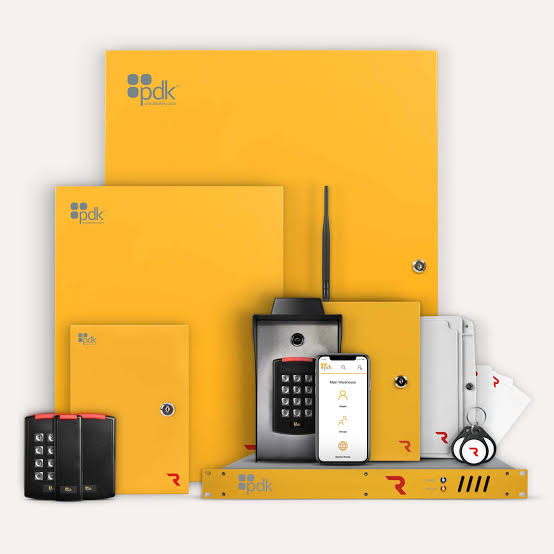
Z-Tech installs PDK cloud access control managed through pdk.io, with credentials held locally at the controller so doors keep unlocking for valid badges if the internet connection drops. The controllers, reader types, and credential options that go into a commercial access control installation in DFW are worth reviewing before you build your door schedule.
Why Your Existing Doors Drive Card Reader Installation Cost More Than the Hardware
Buyers assume the reader is the expensive part. It rarely is. The opening is.
A site walk is really asking six questions. Is the frame hollow metal, aluminum, or wood? Is there an existing strike prep, or does the frame need to be cut? Does the door close and latch on its own every time? Is there conduit from the frame to the ceiling, or does cable have to be fished? Is this an exterior opening that needs a weather-rated reader and a sealed penetration? Is there a slab to core drill for a gate or pedestal reader?
Any one of those answers can add $500 to $2,000 to a single opening. That is why two buildings on the same street get quotes that look nothing alike, and why a bid produced over the phone without a site walk is a guess rather than a price.
Older Dallas and Fort Worth office stock is where this shows up most. Buildings from the 1970s and 1980s often have frames never prepped for electrified hardware, ceilings remodeled around abandoned pathways, and electrical rooms that are already full. That is the same condition our crews work around on cabling projects in multi-tenant office buildings. Newer construction in Plano, Frisco, and the north Tollway corridor is usually easier, and cheaper per opening as a result.
What a Complete Fixed-Price Access Control Quote Should Cover
An access control cost per door figure only means something if the quote behind it is complete. Hold any proposal against this checklist before you compare totals.
- A door-by-door schedule naming each opening, its hardware, and its reader type
- Locking hardware specified by model, including strikes, maglocks, power transfer, and any door or frame work
- Door position switches and request-to-exit devices listed per opening
- Cable type, pathway method, and testing, certified to ANSI/TIA standards
- Controller, enclosure, power supply, and battery backup
- Fire alarm interface and emergency release hardware wherever magnetic locks are used
- The software licensing model stated plainly, including any per-door recurring fee
- Programming of users, groups, schedules, and access levels
- Staff training and written as-built documentation at closeout
- Warranty terms on labor and a stated response time for service calls
A missing line is not a free line. It is a change order waiting to be written.
What Access Control Installation in Dallas Requires That Other Markets Do Not
Two things are specific to working here.
First, licensing. Installing access control in Texas requires a Private Security license through the Texas Department of Public Safety. You can verify any contractor yourself on the state’s Texas Online Private Security portal. Ask for the license number and check it before you sign.
Second, the local authority having jurisdiction. Dallas, Fort Worth, Plano, Frisco, Irving, and Arlington all inspect electrified egress hardware, and their fire marshals do not read the requirements identically. A contractor who works the Metroplex regularly prices the required release hardware and the inspection into the original number. One who does not comes back for more money after the first failed walk-through.
Access control installation in Dallas also involves landlord coordination more often than owner-occupied markets do. Leased space means building engineer approval, certificates of insurance, restricted work hours, and sometimes a requirement to use the base building pathway. Those conditions are predictable and should already be priced.
Z-Tech runs the low-voltage side in-house rather than subcontracting it, using the same crew and the same Fluke DSX testing applied to every structured cabling installation across the Metroplex, from downtown high-rises to tenant buildouts in Fort Worth. That is why the cable portion of the quote does not float.
Get a Fixed Price on Your Doors, Not a Range
You now have the framework to evaluate any quote you receive. The next step is a door count. Walk your building, list the openings you want controlled, and note which are exterior, which are glass, and which already have readers from a previous system.
Call Z-Tech Communications at (469) 991-9100 with that list and we will schedule a site walk. You get back a written, door-by-door fixed price naming every piece of hardware, the cabling method, the licensing model, and the training and documentation delivered at closeout. No allowances and no open-ended ranges. If site conditions turn up work outside that scope, we price it and tell you before we proceed.
Access Control Pricing FAQs
How much does access control cost for a small office?
Budget $1,500 to $3,500 per controlled door for a standard interior opening in good condition, plus the shared cost of the controller and power supply. Offices controlling only the front entrance and a server room sit at the low end of total project cost, since those openings are usually close to the network closet.
Is card reader installation cost lower if I reuse my existing badges?
Sometimes. Multi-technology readers accept most legacy proximity and smart card formats, which avoids reissuing credentials to every employee. The reader itself costs more than a single-format model, so the savings depend on how many badges are in circulation. A site walk tells you which way the math falls.
How much does access control cost to maintain each year?
Plan for software licensing if your platform charges it, replacement credentials for employee turnover, backup battery replacement on a cycle, and periodic service on door hardware and closers. The doors themselves, not the electronics, generate most service calls.
Why do two contractors quote the same building so differently?
Usually scope, not markup. One bid includes door position switches, request-to-exit hardware, fire alarm interface, programming, and documentation. The other assumes your doors are ready for electrified hardware and leaves the rest for change orders. Compare the line items, not the totals.